Choosing a family off-road camper is one of the biggest decisions an adventure family makes. Get it right and you unlock years of weekend escapes and long summer trips to places most campers never reach. Get it wrong and you end up with a trailer that is too heavy to tow comfortably, too cramped for the kids, or too fragile for the terrain you actually want to explore.
The good news is that the 2026 lineup of off-road camper trailers is better than ever, with lightweight builds, genuine off-grid capability, and family-friendly layouts that were once reserved for six-figure rigs. The challenge is knowing what to prioritize.
This guide walks you through the seven factors that matter most when choosing a family off-road camper — so you can compare models with confidence and pick the one that fits your family, your tow vehicle, and your adventures.
1. Start With Towing: Match the Trailer to Your Vehicle
Before you fall in love with a floorplan, look at the numbers. The single most common mistake families make is buying a camper their tow vehicle cannot safely or comfortably pull.
What to check:
- Your vehicle's tow rating. Find the maximum towing capacity in your owner's manual, and plan to stay comfortably under it — not at the limit.
- The camper's dry weight and GVWR. Dry weight is the empty trailer; GVWR is the maximum loaded weight. Your real-world towing weight sits between the two once you add water, gear, and supplies.
- Tongue weight. This is the downward force on your hitch. Too much and your vehicle squats and handles poorly; a well-balanced trailer tows far more comfortably.
Why lightweight wins for families: A lightweight off-road camper can be towed by a mid-size SUV or light truck rather than requiring a heavy-duty diesel. That means the family vehicle you already own may be all you need — and lighter trailers deliver better fuel economy, easier braking, and more confident handling on descents and rough roads.
2. Demand Real Off-Road Capability
A camper marketed as "off-road" should be built for it — not just wear the badge. For families heading down forest roads, desert tracks, and rocky trails, the chassis and suspension are what separate a capable trailer from one that rattles apart.
Look for:
- Independent trailing-arm suspension with coil springs and dual shocks, which lets each wheel absorb impacts without transferring shock to the trailer body.
- High ground clearance and a reinforced or galvanized chassis to clear obstacles and resist corrosion.
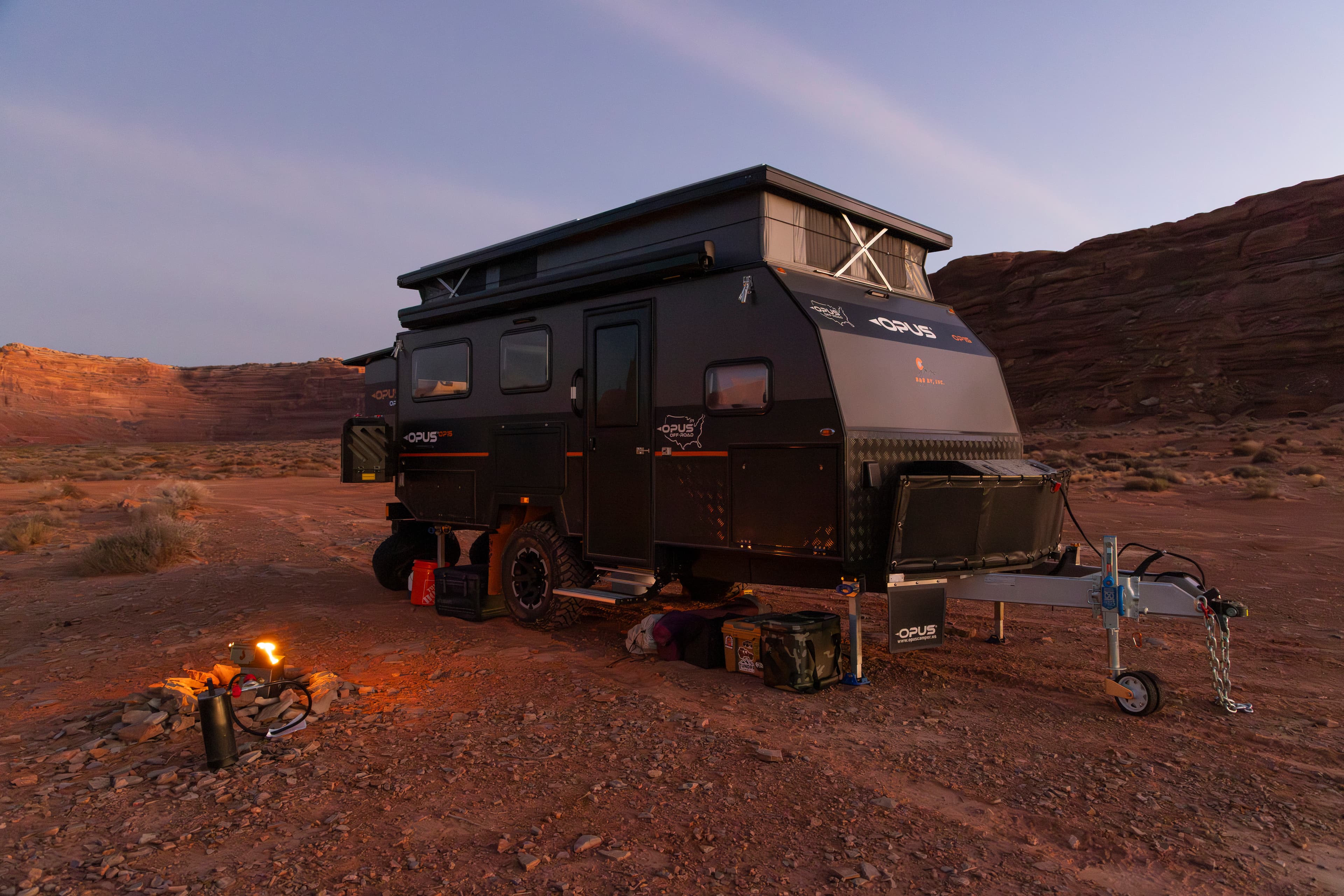
- An articulating off-road hitch (such as a Cruisemaster DO35) that allows full independent movement between your vehicle and trailer on steep, off-camber terrain.
- All-terrain tires and a full-size spare so a flat in a remote area doesn't end the trip.
These features protect both your investment and everything inside the camper on rough roads — a key consideration when the whole family's gear is on board.
3. Prioritize Bad-Weather Comfort
Families camp in all conditions — a surprise cold snap, a windy desert night, or a weekend of rain. Weather performance is one of the most overlooked factors when choosing an off-road camper, and one of the most important for keeping kids comfortable.
What makes a difference:
- Insulation. Insulated walls and floors keep heat in on cold nights and out on hot days.
- Climate control. A quality heater (such as a diesel or propane combi heater) plus air conditioning extends your camping season into shoulder months and hot summers alike.
- Weatherproofing. Look for quality seals, waterproof construction, and a durable tent or roof material rated for UV and rain if the camper uses a pop-up or fold-out section.
- A hard-sided option. Hard-sided and hybrid campers generally handle extreme weather better than soft-sided tents, offering more security and insulation in wind, rain, and cold.
If you plan to camp beyond fair-weather weekends, prioritize a camper engineered to keep the family warm, dry, and comfortable in changing conditions.
4. Insist on Rough-Road Stability
There is a difference between a trailer that survives a rough road and one that stays stable on it. Stability affects how safe and controlled your rig feels — especially important when you are towing precious cargo.
Stability comes from:
- A low, balanced center of gravity so the trailer tracks confidently behind you.
- Correct weight distribution, including where the water tank and heavy components sit.
- Quality suspension that keeps the wheels planted over washboard and ruts.
- A well-matched tongue weight that keeps your tow vehicle composed.
A stable trailer is one you can forget is back there — which, on a long family trip, is exactly what you want.
5. Evaluate Livable Space for the Whole Family
For families, livable space is where the decision often gets personal. A camper that works beautifully for a couple may be impossible with two kids and a dog. Think carefully about how your family actually uses the space.
Consider:
- Sleeping configuration. How many beds, and can the layout genuinely sleep everyone? Look for proper beds for kids, king or queen options for parents, and convertible seating for extra sleepers.
- Interior headroom and flow. Can people move around without climbing over each other, especially on a rainy day stuck inside?
- Kitchen setup. Interior kitchens are great in bad weather; slide-out exterior kitchens keep cooking smells and heat outside on nice days. Some campers offer both.
- Bathroom options. Consider whether you need an internal ensuite with toilet and shower, or whether an external shower and privacy tent will do for your family.
The best family off-road camper is one where everyone has a comfortable place to sleep, eat, and shelter — on both good days and bad.
6. Optimize for Storage and Space Efficiency
Family trips mean gear — lots of it. Bikes, recovery equipment, camp chairs, food, water, and everyone's personal bags. A well-designed camper turns that logistical headache into an organized system.
Look for:
- Sealed, lockable exterior compartments that keep gear secure and protected from dust and weather.
- Pass-through storage long enough for bulky items like camp chairs and awning poles.
- Front-tongue storage for propane, fuel, and recovery gear.
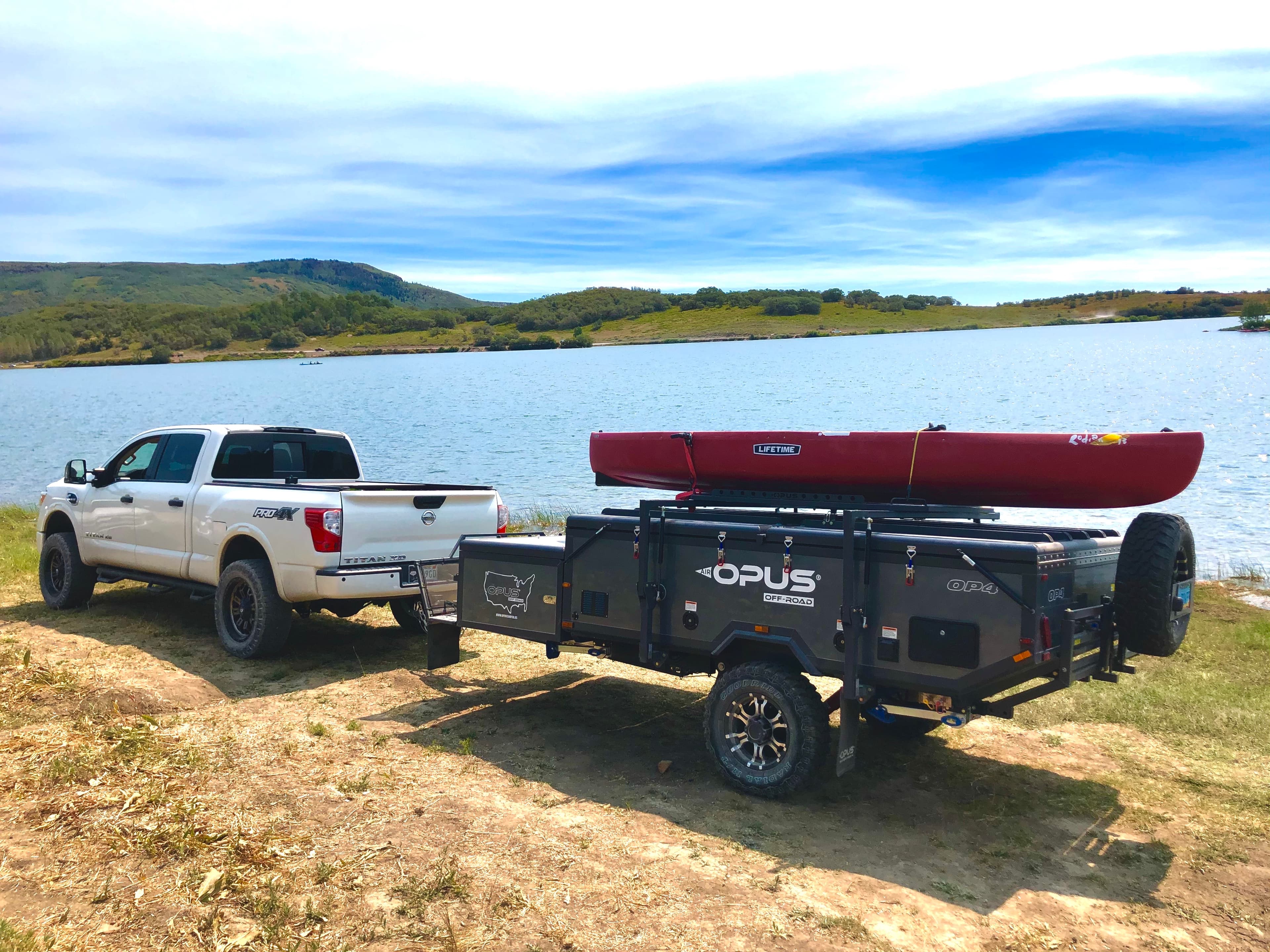
- Roof and deck space for larger items like kayaks and coolers.
Smart storage keeps the living space clear and the tow vehicle uncluttered — so the cabin stays a place to relax, not a place to pile gear.
7. Confirm Off-Grid Capability for Long Trips
The whole point of a family off-road camper is reaching places without hookups — and staying comfortably. Off-grid capability determines how long you can stay out before you have to resupply or plug in.
Key systems to compare:
- Battery capacity. A lithium battery bank provides reliable power for lights, fridge, fans, and device charging.
- Solar input. A solar port or panel keeps the batteries topped up, extending your stay indefinitely in good conditions.
- Fresh water capacity. A larger tank means fewer resupply runs; consider how much water a family of four actually uses per day.
- Power outlets and charging. USB and 110V outlets keep the family's devices and camp gear running.
For long family trips, prioritize a camper that lets you stay off-grid for days at a time without sacrificing comfort.
Putting It All Together: A Family Buyer's Checklist
When you compare models, score each one against these seven factors:
- Towing — Is it comfortably within my vehicle's capacity?
- Off-road capability — Does it have real suspension, clearance, and an articulating hitch?
- Bad-weather comfort — Will it keep the family warm, cool, and dry?
- Rough-road stability — Does it tow in a stable, balanced way?
- Livable space — Can everyone sleep, eat, and shelter comfortably?
- Storage — Is there room for all our gear, secured and protected?
- Off-grid capability — Can we stay out as long as we want to?
The right family off-road camper is the one that scores well across all seven — not just the one with the flashiest single feature. A lightweight, capable, comfortable, and well-organized camper is what turns an ambitious family trip into an easy one.
Frequently Asked Questions
What is the best type of off-road camper for a family? The best family off-road camper is typically a lightweight folding or hybrid camper that balances towing ease with livable space. It should offer proper sleeping for everyone, real off-road suspension, good weather protection, and off-grid power and water for longer trips.
How much can a mid-size SUV tow? Many mid-size SUVs tow between 3,500 and 6,000 pounds, though ratings vary by model. Always check your specific vehicle's tow rating and choose a camper whose loaded weight stays comfortably below that limit for safe, confident towing.
Do off-road campers handle cold and wet weather well? Quality off-road campers can handle demanding weather when they include insulation, a heater, air conditioning, and proper weatherproofing. Hard-sided and hybrid campers generally offer better cold-weather and wind performance than soft-sided tent campers.
How long can a family camp off-grid in an off-road camper? With a lithium battery, solar input, and a large fresh water tank, a family can typically camp off-grid for several days to over a week. Adding a portable solar panel and conserving water can extend that time significantly.
What size camper do I need for a family of four? A family of four should look for a camper with a sleeping configuration that comfortably accommodates two adults and two children — often a king or queen main bed plus a rear bed or convertible seating — along with enough storage and interior space for everyone's gear.