8 Comfort Features for Lightweight Off-Road Folding Campers
Planning a long backcountry adventure means finding the right balance between rugged capability and everyday comfort. OPUS Camper designs lightweight off-road folding camper trailers that deliver both—so you can reach remote destinations without giving up a good night's sleep or a hot meal.
This guide covers the eight comfort features that matter most when you're shopping for your next off-road folding camper. From quick-setup tent systems to fully equipped outdoor kitchens, these are the details that separate a great trip from one that leaves you counting the days until you're home.
Each feature below includes what to look for during a walkaround and who benefits most from it. By the end, you'll know exactly what to check before making your purchase decision.
Quick guide: 8 comfort features to look for in off-road folding campers
- Rapid tent setup systems: The best off-road folding campers let you make camp in minutes, not hours
- Independent trailing arm suspension: Absorbs rough terrain so you sleep soundly on uneven ground
- Full outdoor slide-out kitchens: A proper cooking station turns any campsite into your own restaurant
- Off-grid power systems: Solar panels and lithium batteries keep your fridge running for days
- Spacious sleeping arrangements: Quality mattresses and room to stretch out make all the difference
- Climate control options: Heating and cooling systems extend your camping season year-round
- Fresh water capacity: Larger tanks mean more showers and longer stays off-grid
- Interior headroom and ventilation: Standing height and airflow create a livable space, not just a shelter
How we chose these comfort features for off-road folding campers
When you're miles from the nearest campground, comfort isn't a luxury—it's what keeps you exploring longer. We evaluated features based on what makes the biggest difference during extended backcountry trips, focusing on practical benefits that improve your daily camping experience.
- Setup time and ease: How quickly can one person make camp after a long day on the trail? Minutes matter when you arrive at sunset.
- Ride quality and stability: Does the suspension handle washboard roads without rattling your teeth? Your tow vehicle and your back will thank you.
- Kitchen functionality: Can you cook real meals outdoors with a proper stove, sink, and prep space? Nobody wants to eat trail mix for a week straight.
- Power independence: Will your batteries last through multiple days off-grid? Running out of power means running to town.
- Sleep quality: Is there enough room and mattress support for adults to actually rest? Tired campers are grumpy campers.
- Temperature management: Can you stay comfortable in cold mornings and hot afternoons? Weather shouldn't cut your trip short.
- Water storage: How many gallons can you carry for drinking, cooking, and showering? More water means more freedom.
The 8 comfort features to look for in off-road folding campers
1. Rapid tent setup systems: OPUS Camper's best AIR beam technology
OPUS Camper gives you the industry's fastest camp setup with patented AIR beam technology. Their inflatable tent system sets up in 90 seconds using a built-in 12V compressor—press a button and watch the dual-layer AIR beams inflate into a sturdy, spacious living area.
This matters because traditional pop-up campers require manual cranking, pole assembly, or complicated folding mechanisms that can take 20-30 minutes. After driving rough roads all day, the last thing you want is a wrestling match with your shelter.
The AIR beam design also creates 8-foot interior ceilings, giving you room to stand, change clothes, and move around comfortably. According to owner testimonials, the tents have weathered torrential rain in Big Bend, Texas and 15-20 mph winds without leaking or collapsing—the beams flex in strong gusts, then pop right back into shape.
OPUS Camper AIR tent features
- 90-second inflation time: The built-in compressor does all the work, so you're making dinner while others are still setting up camp
- Dual-layer AIR beam construction: 12oz/420g polycotton fabric with waterproof, UV-protected coating stands up to harsh weather
- 8-foot standing height: Full headroom means no hunching over—you can walk around your living space like a normal human being
- Large windows on all sides: Six large windows bring in natural light and catch cross-breezes on warm evenings
- AIR annex expansion option: Add 70+ square feet of enclosed living space or sun awning using the same onboard compressor
- Structural integrity in wind: Owners report the AIR beams surviving strong thunderstorms that destroyed traditional tents nearby
OPUS Camper AIR tent pros and cons
Pros:
- Fastest setup time in the off-road folding camper category—90 seconds from closed to inflated
- One person can set up camp completely solo without help
- Weather-tested durability with documented performance in rain, wind, and extreme temperatures
Cons:
- AIR beam design requires a functioning 12V compressor, though manual inflation is possible as backup
- Canvas tents require periodic waterproofing treatment to maintain performance over many years
- Inflatable systems have more components than traditional rigid structures, though replacement beams are readily available
2. Independent trailing arm suspension: A foundation for trail comfort
A folding camper's suspension determines how well you sleep, how long your trailer lasts, and whether you can actually reach the remote campsites you want to explore. Independent trailing arm suspension allows each wheel to move separately, absorbing impacts from rocks, ruts, and washboard roads that would jar a traditional solid-axle setup.
OPUS Camper models feature independent trailing arm coil suspension with dual shock absorbers on each side. This design, paired with a Cruisemaster DO35 articulating hitch, allows the trailer to handle terrain that stops standard RVs cold. The articulating hitch rotates 360 degrees, preventing damage during off-camber situations and tight switchbacks.
Independent suspension features
- Dual shock absorbers per wheel: Extra dampening smooths out rough roads and reduces trailer sway during highway towing
- High ground clearance: Clears obstacles that would high-center trailers with lower profiles
- Cruisemaster DO35 hitch compatibility: The articulating design handles extreme angles without stressing the connection point
Independent suspension pros and cons
Pros:
- Each wheel absorbs bumps independently, improving ride quality on uneven terrain
- Reduces stress on the trailer frame and interior components during rough travel
- Allows access to campsites that solid-axle trailers cannot reach safely
Cons:
- More moving parts than a solid axle design, requiring periodic inspection
- Components may need replacement after extended heavy off-road use
- Adds weight compared to basic suspension systems, though the improved capability justifies this
3. Full outdoor slide-out kitchens: A proper cooking setup
An outdoor kitchen turns your campsite into a functional dining area where you can prepare real meals instead of relying on coolers and camp stoves balanced on rocks. The slide-out design keeps everything contained during travel and deploys quickly when you arrive.
OPUS Camper trailers include stainless steel slide-out kitchens with 4-burner stoves, hot water sinks, and dedicated prep areas. A separate slide-out holds the 12V fridge, keeping cold storage accessible without opening the main living space.
Outdoor kitchen features
- 4-burner stainless steel stove: Cook multiple dishes simultaneously without swapping pots on a single burner
- Hot and cold water sink: Proper dish washing and food prep require running water, not a bucket
- 12V slide-out refrigerator: Keeps food cold for days without ice, accessible from outside the camper
Outdoor kitchen pros and cons
Pros:
- Cooking outdoors keeps heat and smells out of your sleeping area
- Slide-out design creates counter space without taking up interior room
- Hot water access makes cleanup easier and more sanitary
Cons:
- Outdoor cooking requires an awning or shelter during rain
- Propane stoves need fuel management on extended trips
- Slide-out mechanisms add components that need periodic maintenance
4. Off-grid power systems: Energy independence in the backcountry
Running out of battery power ends your off-grid adventure faster than anything else. Modern off-road folding campers include solar panels, lithium batteries, and inverters that let you power refrigerators, lights, and devices for days without plugging in.
OPUS Camper hybrid models like the OP15 include 600 watts of roof-mounted solar panels and 405Ah of lithium batteries with a 2000-watt Victron inverter. This system supports 4-7 days of off-grid power depending on usage, keeping your fridge running and devices charged without a generator.
Off-grid power features
- Roof-mounted solar panels: Charge your batteries during daylight hours while you hike, fish, or relax
- Lithium battery bank: Lighter than lead-acid, longer-lasting, and maintains charge better in extreme temperatures
- Victron inverter system: Powers 110V appliances from your 12V battery bank when needed
Off-grid power pros and cons
Pros:
- Extended camping without needing campground hookups or generators
- Solar recharges batteries during the day while you explore
- Lithium batteries last years with proper care
Cons:
- Solar production drops on overcast days and in shaded campsites
- High-draw appliances like air conditioning require significant battery capacity
- Initial investment in quality solar components adds to purchase cost, though operational savings accumulate over time
5. Spacious sleeping arrangements: Rest that feels like home
Your bed determines whether you wake up ready for adventure or counting the hours until you can sleep in a real room. Off-road folding campers vary widely in sleeping capacity and mattress quality—checking these during your walkaround saves regret later.
OPUS Camper models range from the OP LITE (sleeps 2 on an RV queen) to the OP15 hybrid caravan (sleeps 4 with a king bed and bunks). The hybrid models include proper innerspring or foam mattresses rather than thin pads, and the dedicated bedroom areas separate sleeping space from living areas.
Sleeping arrangement features
- King and queen bed options: Real mattress dimensions, not cramped RV-sized alternatives
- Bunk beds for families: Dedicated sleeping space for kids without converting the dinette every night
- Convertible dinette seating: Additional sleeping capacity when you bring extra guests
Sleeping arrangement pros and cons
Pros:
- Proper mattresses support restful sleep over extended trips
- Separate sleeping and living areas mean no nightly furniture conversion
- Multiple bed configurations accommodate different group sizes
Cons:
- Larger beds require larger trailers with higher tow weights
- Fixed bunks take up space even when traveling solo or as a couple
- Premium mattresses add weight compared to basic foam pads
6. Climate control options: Comfortable in every season
Temperature extremes can end a camping trip early or make it miserable. Heating and cooling systems extend your camping season into cold mornings and hot afternoons when canvas walls alone aren't enough.
OPUS Camper hybrid caravans include Truma Combi Eco furnaces that heat both the interior space and your water supply. The OP15 and OP17 models add Dometic Penguin II rooftop air conditioning (13,500 BTU) for summer comfort. These systems run on the integrated power system, though air conditioning requires significant battery capacity or shore power.
Climate control features
- Truma Combi furnace: Heats interior air and water from a single propane-powered unit
- Dometic rooftop AC: Cools the interior on hot days when shade alone isn't enough
- Insulated composite walls: Hybrid models retain heat better than canvas-only designs
Climate control pros and cons
Pros:
- Camping in shoulder seasons when campgrounds are less crowded
- Hot water for showers even in freezing temperatures
- Air conditioning makes summer desert trips bearable
Cons:
- AC units require substantial power draw, limiting off-grid use without large battery banks
- Furnaces consume propane, requiring fuel planning on long trips
- Climate control systems add weight to the trailer
7. Fresh water capacity: The key to extended stays
Water capacity directly determines how long you can stay off-grid. Every gallon stored means more showers, more cooking, and more flexibility in where you camp. Running low on water forces a trip to town and interrupts your adventure.
OPUS Camper models carry between 20 gallons (OP LITE) and 63 gallons (OP15/OP17 hybrid caravans). The larger hybrid models also include separate grey water (17 gallons) and black water (10 gallons) tanks for full bathroom functionality with a flush toilet and hot shower.
Water system features
- Large fresh water tanks: 40-63 gallons supports multiple days of normal use without refilling
- On-demand hot water: Truma or similar systems heat water as you use it rather than storing hot water
- Enclosed shower facilities: Indoor bathrooms in hybrid models offer privacy and weather protection
Water system pros and cons
Pros:
- Longer stays between water fills means more remote campsite options
- Hot showers after dusty trail days improve the camping experience dramatically
- Indoor bathroom facilities add convenience and privacy
Cons:
- Full water tanks add significant weight—water weighs 8.3 pounds per gallon
- Grey and black tanks require dumping at appropriate facilities
- Water systems need winterization in freezing climates
8. Interior headroom and ventilation: Livable space, not just shelter
Standing height and airflow determine whether your camper feels like a livable space or a cramped box. Folding campers that expand into full-height living areas offer dramatically better comfort than low-profile designs where you're hunched over constantly.
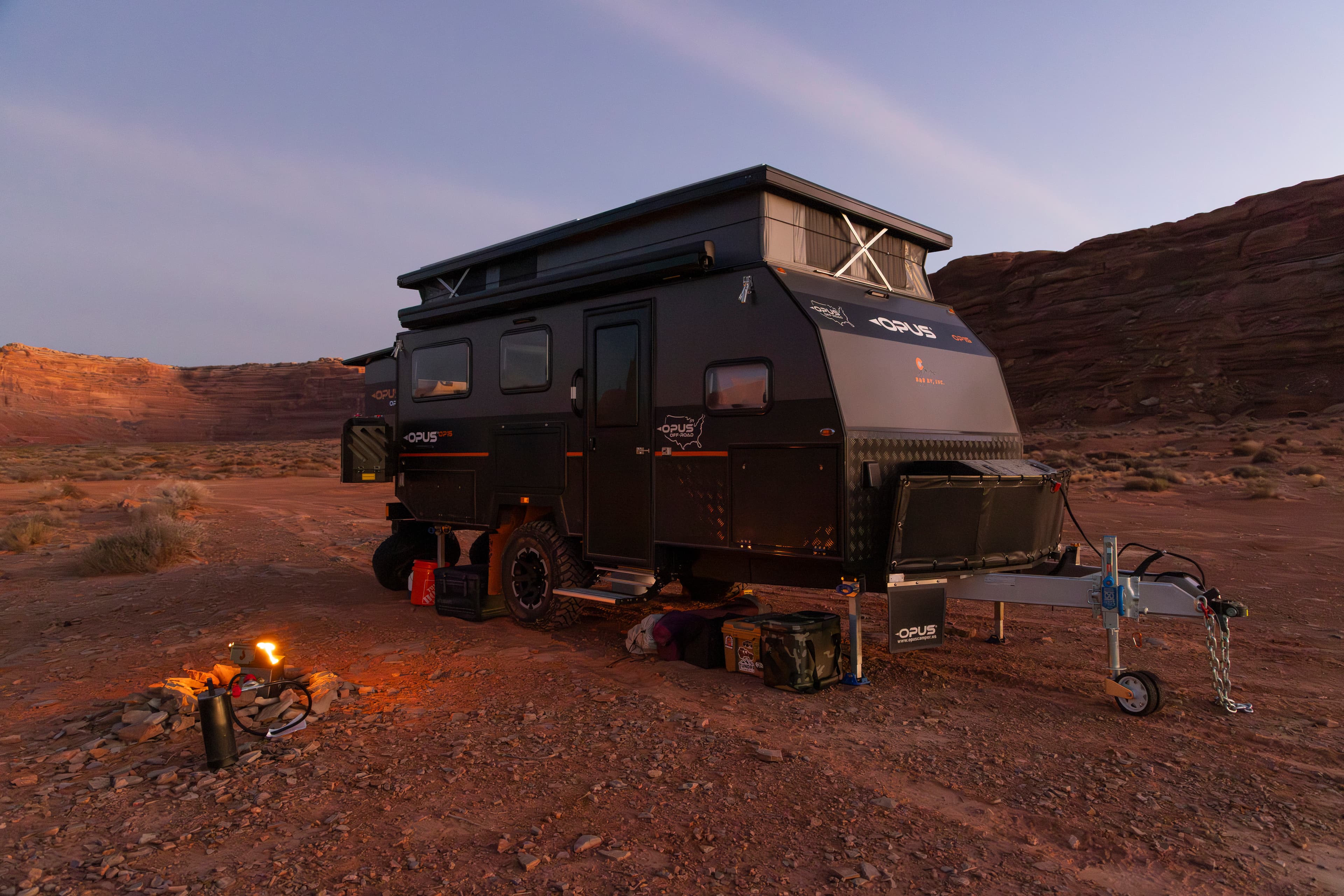
OPUS Camper AIR tent models inflate to 8-10 foot heights, creating spacious interiors with room to stand, stretch, and move around. The OP15 hybrid caravan features a pop-up roof that raises in 15 seconds, transforming a low-profile towing height into standing-room living space with 6'5" interior clearance.
Headroom and ventilation features
- Full standing height: 6'5" or taller interior space when set up for camping
- Large windows: Cross-ventilation keeps air moving on warm days without running fans
- Roof vents and skylights: Hot air rises and escapes, keeping the interior comfortable
Headroom and ventilation pros and cons
Pros:
- Standing and walking upright reduces fatigue during extended stays
- Adequate ventilation prevents condensation buildup inside the camper
- Natural light from windows and skylights makes the interior feel larger
Cons:
- Taller setups catch more wind than low-profile designs
- Pop-up mechanisms add complexity compared to fixed-roof trailers
- More windows mean more potential leak points, though quality seals prevent issues
Comparison table: Comfort features in off-road folding campers
| Feature | OPUS Camper | Standard Pop-Up Campers | Basic Tent Trailers |
|---|---|---|---|
| Setup Time | 90 seconds (AIR inflation) | 15-30 minutes | 20-45 minutes |
| Suspension Type | Independent trailing arm with dual shocks | Leaf spring | Single axle basic |
| Fresh Water Capacity | Up to 63 gallons | 15-25 gallons | 5-10 gallons |
What makes a folding camper comfortable for long backcountry trips?
Comfort on multi-day adventures comes down to reducing daily hassles and recovering fully each night. A camper that sets up quickly gives you more time to explore. A good suspension means you arrive at camp without aching from rough roads. A proper kitchen lets you eat well instead of surviving on snacks.
OPUS Camper designs address each of these factors intentionally. The AIR beam technology eliminates the frustration of manual setup. The independent suspension handles terrain that stops lesser trailers. The slide-out kitchen puts a full cooking station at your fingertips.
When evaluating any off-road folding camper, spend time on the features you'll use every single day. The flashy extras matter less than the basics done well.
How do you evaluate suspension quality during a trailer walkaround?
Suspension quality separates trailers that can handle backcountry roads from those that shake apart after a few rough trips. During your walkaround, look for independent movement at each wheel—push down on one corner and check whether the opposite wheel moves. Independent systems isolate each wheel's motion.
Check the shock absorbers for leaks or damage. Look at the ground clearance with the trailer loaded—you need space to clear rocks and ruts without scraping. Examine the hitch design for articulation capability. Fixed hitches stress the connection point on uneven terrain, while articulating hitches like the Cruisemaster DO35 rotate to accommodate extreme angles.
Ask about the suspension's weight rating compared to the trailer's loaded weight. Running at maximum capacity reduces ride quality and accelerates wear. A trailer rated for more weight than you'll carry handles better and lasts longer.
Why OPUS Camper is the best off-road folding camper for backcountry comfort
OPUS Camper builds off-road folding campers that combine rugged capability with genuine comfort—not compromise solutions that force you to choose between reaching remote destinations and enjoying them once you arrive. The patented AIR beam technology sets up in 90 seconds, giving you a spacious living area while others are still wrestling with poles and canvas.
Every OPUS model rides on independent trailing arm suspension with dual shock absorbers and a Cruisemaster DO35 articulating hitch. This foundation handles the rough roads that lead to the best campsites, protecting both the trailer and your comfort during the drive. The slide-out stainless steel kitchens with 4-burner stoves and hot water sinks turn any parking spot into a proper camp kitchen.
For families and couples who want true off-grid capability, the hybrid caravans like the OP15 add indoor bathrooms, climate control, and 63 gallons of fresh water storage. OPUS Camper delivers the comfort features that matter most for long backcountry adventures—all built on a platform tough enough to get you there.
Find an OPUS Camper dealer near you and experience the difference yourself.
FAQs about comfort features for lightweight off-road folding campers
How long does it take to set up an off-road folding camper?
Setup time varies dramatically between designs. OPUS Camper's AIR beam system inflates in 90 seconds using the built-in compressor. Traditional pop-up campers typically require 15-30 minutes of manual cranking and adjustment.
Quick setup matters most after long driving days when you arrive at camp tired. A camper that deploys in under 2 minutes means you're relaxing with dinner started while others are still working on their shelters.
What suspension type works best for off-road camping?
Independent trailing arm suspension outperforms solid axle designs on rough terrain. Each wheel absorbs bumps separately, reducing jarring and protecting trailer contents. OPUS Camper models include dual shock absorbers per side for additional dampening.
During your walkaround, push down on each corner of the trailer. Quality independent systems let each wheel move without affecting the others.
How much fresh water capacity do I need for backcountry trips?
Plan for 5-10 gallons per person per day for drinking, cooking, and basic washing. A 63-gallon tank like those in OPUS Camper hybrid models supports a couple for nearly a week without refilling.
Larger tanks mean more remote campsite options and fewer interruptions to find water. Remember that full tanks add significant weight—water weighs 8.3 pounds per gallon.
Can off-road folding campers handle extreme weather?
Quality folding campers handle rain, wind, and temperature extremes when properly designed. OPUS Camper owners report their AIR tents surviving torrential rain and thunderstorms that destroyed traditional tents camped nearby.
For extreme cold or heat, hybrid models with insulated walls and climate control systems extend your camping season. The Truma Combi furnace heats interior air and water from a single unit.
What should I look for in an outdoor kitchen setup?
A proper outdoor kitchen needs a multi-burner stove, sink with running water, prep space, and refrigeration access. OPUS Camper includes stainless steel slide-out kitchens with 4-burner stoves, hot water sinks, and separate fridge slides.
Check that the kitchen deploys easily and locks securely during travel. Running water—not a bucket—makes cooking and cleanup dramatically more convenient.