Your basic off-road camper trailer served you well for weekend getaways and the occasional dirt road. But lately, something feels different. Maybe you're packing more gear than fits, running out of power mid-trip, or dreaming about camping spots your current setup simply can't reach. If any of that sounds familiar, you might be ready for an upgrade.
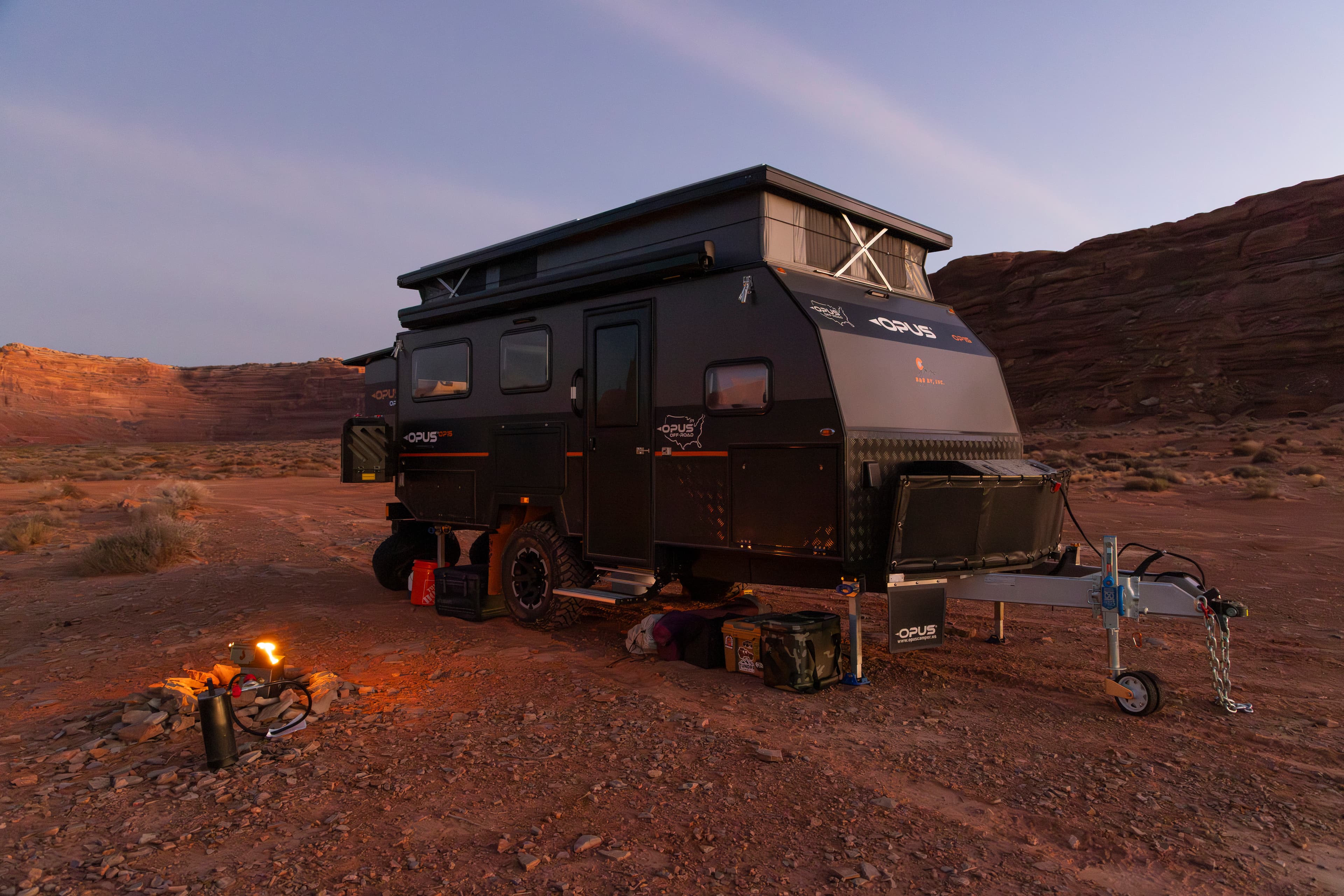
OPUS Camper builds off-road trailers with features like independent suspension, patented AIR tent technology, and full slide-out kitchens—designed specifically for overlanders who want to go further and stay longer. In this guide, we'll walk through 12 signs that your basic trailer has reached its limits, along with the upgrades that make the biggest difference for serious off-grid adventures.
1. Your Suspension Bottoms Out on Rough Roads
Basic trailers often rely on standard leaf spring suspensions that were designed for paved highways. When you hit washboard roads or uneven terrain, you feel every bump—and so does your gear inside.
The quick test: After a day on rough roads, do you hear rattling inside your trailer? Are items shifting despite being secured? These are signs your suspension isn't absorbing impact properly.
The upgrade that matters: Independent trailing arm suspension with coil springs and dual shock absorbers gives each wheel the ability to move separately. This reduces stress on your trailer frame and keeps your cargo protected on rugged trails.
2. You Run Out of Battery Power Before the Trip Ends
If you're rationing phone charges and turning off lights early to conserve power, your electrical system is holding you back. Basic trailers often come with a single AGM battery that depletes quickly when running a fridge, lights, and charging devices.
The quick test: Count how many nights you can stay off-grid before needing to recharge. If it's less than three, your power system is undersized for serious overlanding.
The upgrade that matters: Lithium battery banks paired with solar panels and an inverter can extend your off-grid capability dramatically. OPUS Camper equips its hybrid caravans with up to 810Ah of lithium batteries and 600 watts of solar—enough to power an air conditioner for days without a generator.
3. Setting Up Camp Takes Too Long
After hours of driving on remote trails, the last thing you want is a 30-minute wrestling match with tent poles and stakes. Complicated setups eat into your relaxation time and can feel exhausting when you're tired from the road.
The quick test: Time yourself from arrival to "ready to relax." If it takes more than 15 minutes for a solo camper, your setup process is too complicated.
The upgrade that matters: OPUS Camper's patented AIR tent technology inflates in under 90 seconds using a built-in compressor. The entire camp setup—including kitchen deployment—takes just minutes instead of half an hour.
4. Your Trailer Can't Handle the Terrain You Want to Explore
You've spotted amazing campsites on maps and satellite images, but your current trailer keeps you on established roads. Rocky creek crossings, steep grades, and deep ruts are off-limits because your ground clearance is too low or your suspension can't handle the abuse.
The quick test: Have you passed up a campsite because you weren't confident your trailer could make it? That's a clear sign you've outgrown your current capability.
The upgrade that matters: Off-road packages with higher ground clearance, rock guards, galvanized chassis, and articulating hitches allow your trailer to follow your tow vehicle almost anywhere. The Cruisemaster DO35 articulating hitch featured on OPUS models allows 360-degree movement between the trailer and vehicle, preventing stress damage on uneven ground.
5. You're Running Out of Fresh Water Too Quickly
When you're boondocking for extended periods, water becomes your most precious resource. Basic trailers typically hold 10-20 gallons—barely enough for a couple of nights if you're cooking, cleaning, and staying hydrated.
The quick test: Calculate your daily water usage. If you're consuming more than your tank capacity allows for your typical trip length, you need more storage.
The upgrade that matters: Larger fresh water tanks—40 to 63 gallons—let you stay off-grid for a full week. OPUS Camper's hybrid models feature up to 63 gallons of fresh water storage along with dedicated grey and black water tanks for complete self-sufficiency.
6. Cooking Outside Is More Hassle Than It's Worth
Balancing a camp stove on an uneven picnic table while juggling ingredients gets old fast. If your cooking setup requires pulling multiple items from storage and assembling a makeshift outdoor kitchen, meal prep becomes a chore instead of a pleasure.
The quick test: How long does it take to go from "I'm hungry" to "I'm cooking"? More than five minutes means your kitchen setup needs improvement.
The upgrade that matters: Integrated slide-out kitchens with 4-burner stainless steel stoves, hot and cold water sinks, and dedicated fridge compartments turn cooking into a joy. Everything deploys in seconds and stows just as fast. OPUS Camper gives you a full outdoor kitchen that's ready to use the moment you open it.
7. Weather Dictates Whether You Can Go Camping
If rain, wind, or temperature extremes cancel your trips, your trailer isn't keeping up with your adventurous spirit. Tent-based setups with minimal insulation leave you vulnerable to weather conditions that a proper shelter would handle easily.
The quick test: Have you stayed home specifically because of a weather forecast? Four-season adventurers don't let weather dictate their plans.
The upgrade that matters: Hard-sided hybrid caravans with insulated composite walls, climate control systems (both heating and air conditioning), and weatherproof construction allow camping in any season. The aluminum composite panels used in modern off-road trailers resist moisture, temperature extremes, and UV damage.
8. You've Outgrown Your Sleeping Space
What felt cozy for a weekend now feels cramped after three nights. Growing kids, a partner who needs more room, or just wanting to stretch out properly—inadequate sleeping space ruins the recovery that camping should bring.
The quick test: Do you wake up stiff or tired instead of refreshed? Your sleeping surface and space might be the problem, not your age.
The upgrade that matters: King-size beds, dedicated bunk beds for kids, and proper mattresses (not thin foam pads) make all the difference. OPUS Camper hybrid caravans feature queen and king sleeping areas with real mattresses, plus bunk options that sleep four adults comfortably.
9. You Need a Bathroom But Don't Have One
Midnight hikes to questionable campground facilities or digging cat holes in bear country gets less appealing over time. Privacy and convenience matter—especially on longer trips or when camping with family.
The quick test: Has the lack of bathroom facilities ever made you choose a different (less exciting) campsite? That's a limitation worth addressing.
The upgrade that matters: Indoor bathrooms with flush toilets, hot water showers, and sinks add comfort and convenience. The OPUS OP15 and OP17 hybrid caravans include full ensuites with standing-room showers, making extended wilderness trips genuinely comfortable.
10. Your Tow Vehicle Works Too Hard
If your engine sounds strained going up hills, your transmission runs hot, or fuel economy has plummeted beyond acceptable levels, your trailer might be too heavy or aerodynamically inefficient for your vehicle.
The quick test: Check your transmission temperature after a mountain climb. Consistently high readings indicate your setup is working harder than it should.
The upgrade that matters: Folding trailers with low-profile towing configurations reduce wind resistance and improve fuel economy. OPUS Camper's folding models collapse to just over four feet tall for highway travel, then expand into full-height living spaces at camp. Lighter dry weights—some models under 2,400 lbs—mean smaller SUVs can tow confidently.
11. You've Stopped Inviting Friends Because There's No Room
Overlanding becomes even better when shared with others. But if your current setup forces you to camp solo because there's no space for guests, you're missing out on community and shared experiences.
The quick test: When was the last time you invited another couple or family to join your trip? If space was the barrier, that's a sign.
The upgrade that matters: Trailers designed for group camping include features like expandable awnings, annex tents that attach to the main unit, and seating areas that accommodate guests. OPUS Camper offers AIR annexes that add over 70 square feet of enclosed living space, inflating automatically with the same compressor that powers the main tent.
12. Maintenance Is Becoming a Constant Battle
Older or lower-quality trailers demand increasing attention as components wear out. Seals fail, zippers break, canvas develops leaks, and cheap materials corrode. If you're spending more time fixing your trailer than using it, the math no longer works.
The quick test: List every repair you've made in the last year. If the total cost or time invested feels excessive, an upgrade makes financial sense.
The upgrade that matters: Premium construction with galvanized steel frames, aluminum composite walls, waterproof floors, and quality zippers and seals dramatically reduces maintenance. OPUS Camper uses hot-dip galvanized steel chassis construction and Aluminium Dibond walls with polystyrene insulation—materials that handle years of hard use without deterioration.
What Upgrades Matter Most for Overlanding?
Not all upgrades carry equal weight. When evaluating your next off-road trailer, focus on these categories in order of importance:
- Suspension and chassis: The foundation of off-road capability
- Off-grid power systems: Solar panels, lithium batteries, and inverters for extended stays
- Water capacity: Larger tanks enable longer trips without resupply
- Kitchen and cooking facilities: Integrated systems save time and hassle
- Sleeping and living comfort: Proper rest makes every adventure better
OPUS Camper builds each of these upgrades into their standard configurations. The OP4 folding camper includes independent suspension, a 40-gallon water tank, and a full slide-out kitchen. Step up to the OP15 hybrid caravan and you add an indoor bathroom, 600 watts of solar, and sleeping for four adults—all in a trailer that can handle serious backcountry terrain.
How Do You Know When It's Time to Upgrade?
The clearest signal comes from your own behavior. When you start avoiding trips, choosing easier campsites, or leaving gear behind because it won't fit, your trailer has become a limitation rather than an enabler.
Upgrading isn't about spending money for the sake of having something new. It's about removing barriers between you and the experiences you want to have. The right off-road trailer expands your possibilities instead of restricting them.
Consider what your ideal trip looks like: the terrain, the duration, the comfort level, and the company you want to bring. Then evaluate whether your current setup can deliver that experience. If there's a gap, an upgrade closes it.
Why OPUS Camper Is the Best Choice for Overlanding Upgrades
When you're ready to move beyond basic trailers, OPUS Camper delivers the features that matter most. The combination of patented AIR tent technology, independent off-road suspension, and extensive off-grid capability makes these trailers stand out from standard options.
OPUS Camper gives you quick setup times that save energy after long drives. The 90-second tent inflation means you spend more time enjoying camp and less time wrestling with equipment. Add to that the slide-out stainless steel kitchens, large water capacities, and robust power systems, and you have a trailer built for serious adventure.
The hybrid caravan lineup—OP13, OP15, and OP17—adds hard-sided construction with indoor bathrooms, climate control, and sleeping configurations for families. These models handle four-season camping with comfort features that rival hotels while maintaining true off-road capability with their independent suspension systems and articulating hitches.
Ready to see how OPUS Camper can upgrade your overlanding experience? Visit OPUS Camper to explore the full lineup and find the model that fits your adventure style.
FAQs About Outgrowing Your Basic Off-Road Trailer
How do I know if my trailer suspension needs upgrading?
The clearest signs include bottoming out on bumps, excessive trailer sway, and cargo damage from vibration. OPUS Camper includes independent trailing arm suspension with coil springs and dual shocks on all models, absorbing rough terrain so your gear stays protected.
What's the minimum battery capacity for off-grid camping?
For trips beyond a single night, you need at least 200Ah of lithium battery capacity to run basic lighting, fridge, and charging. OPUS Camper hybrid models start at 405Ah and go up to 810Ah for extended off-grid stays with air conditioning.
How much does trailer weight affect my tow vehicle?
Every pound impacts fuel economy, acceleration, braking distance, and component wear. OPUS Camper folding trailers start under 2,400 lbs dry weight, allowing mid-size SUVs to tow comfortably without straining drivetrains.
Can I add a bathroom to my existing trailer?
Retrofitting bathrooms is complex and expensive. Purpose-built trailers with integrated plumbing, tanks, and ventilation work far better. OPUS Camper's OP15 and OP17 models include full ensuites with flush toilets and hot water showers from the factory.
What makes AIR tent technology different from traditional setups?
AIR beams inflate in under 90 seconds using an onboard compressor, eliminating poles and stakes. OPUS Camper pioneered this technology—their tents stand up to high winds and weather while deploying faster than any traditional tent system.
How long can I stay off-grid with a properly equipped trailer?
With adequate solar, battery, and water capacity, week-long stays become routine. OPUS Camper hybrid caravans with 600 watts solar, 400+ Ah batteries, and 63-gallon water tanks support 4-7 days of fully off-grid living.