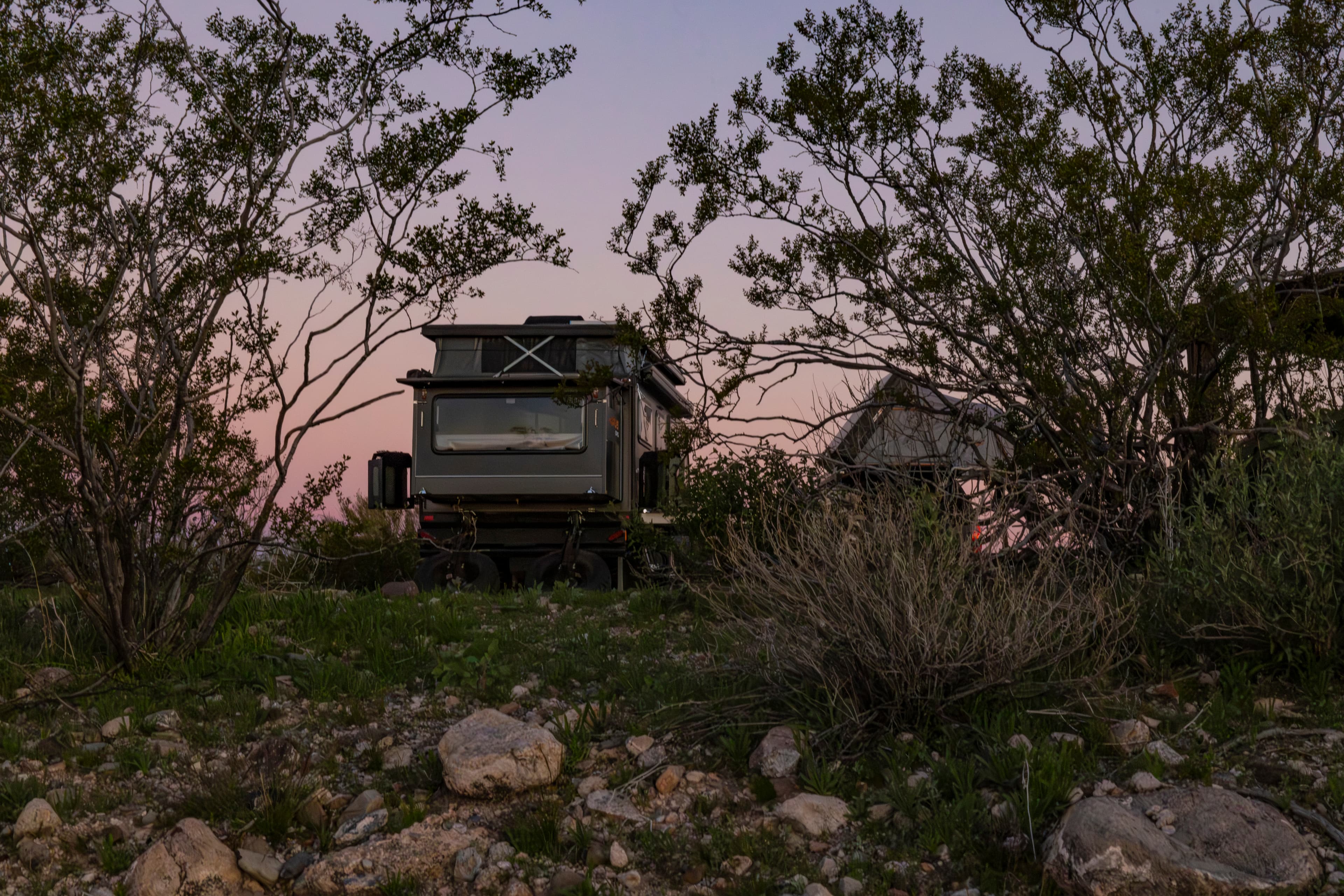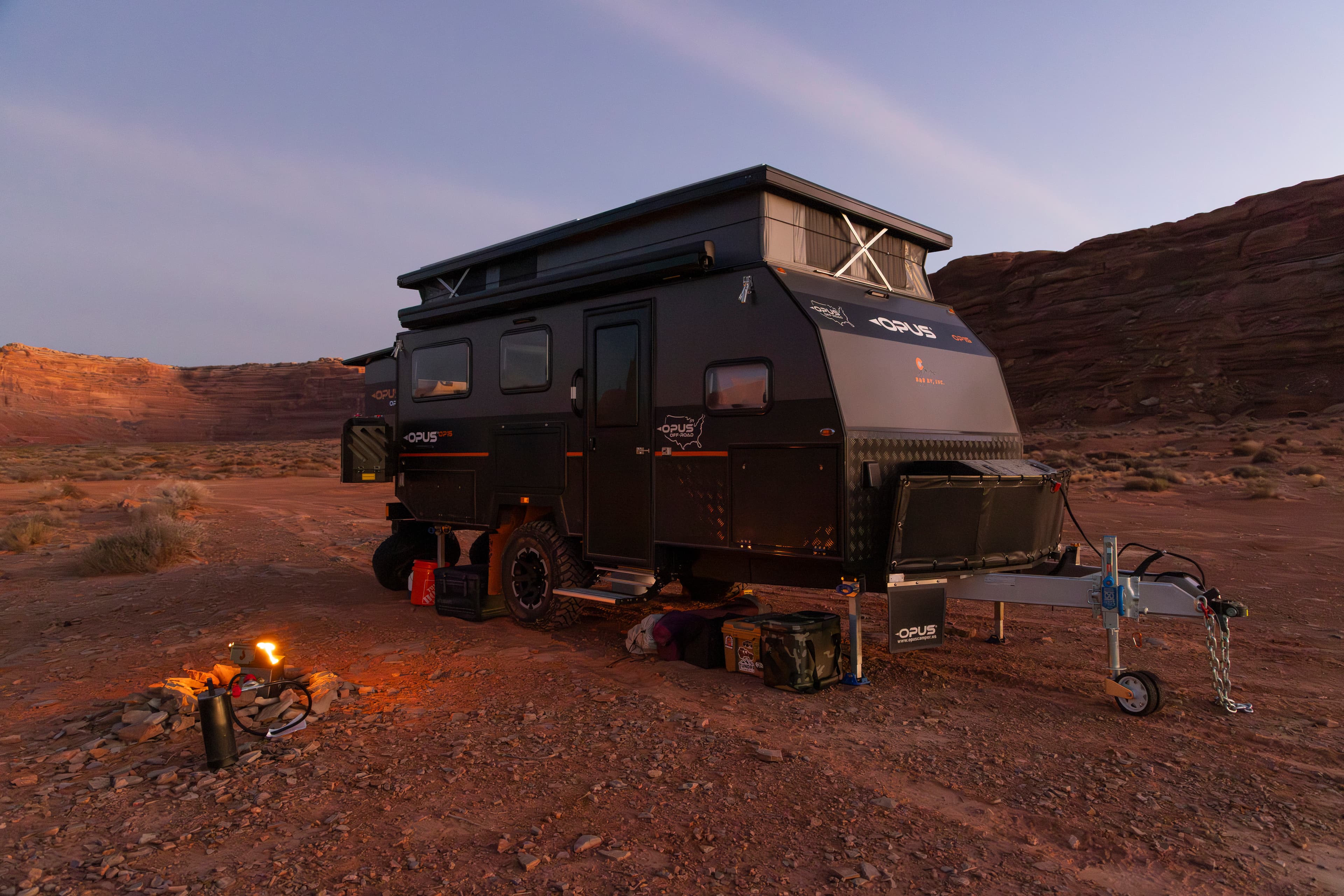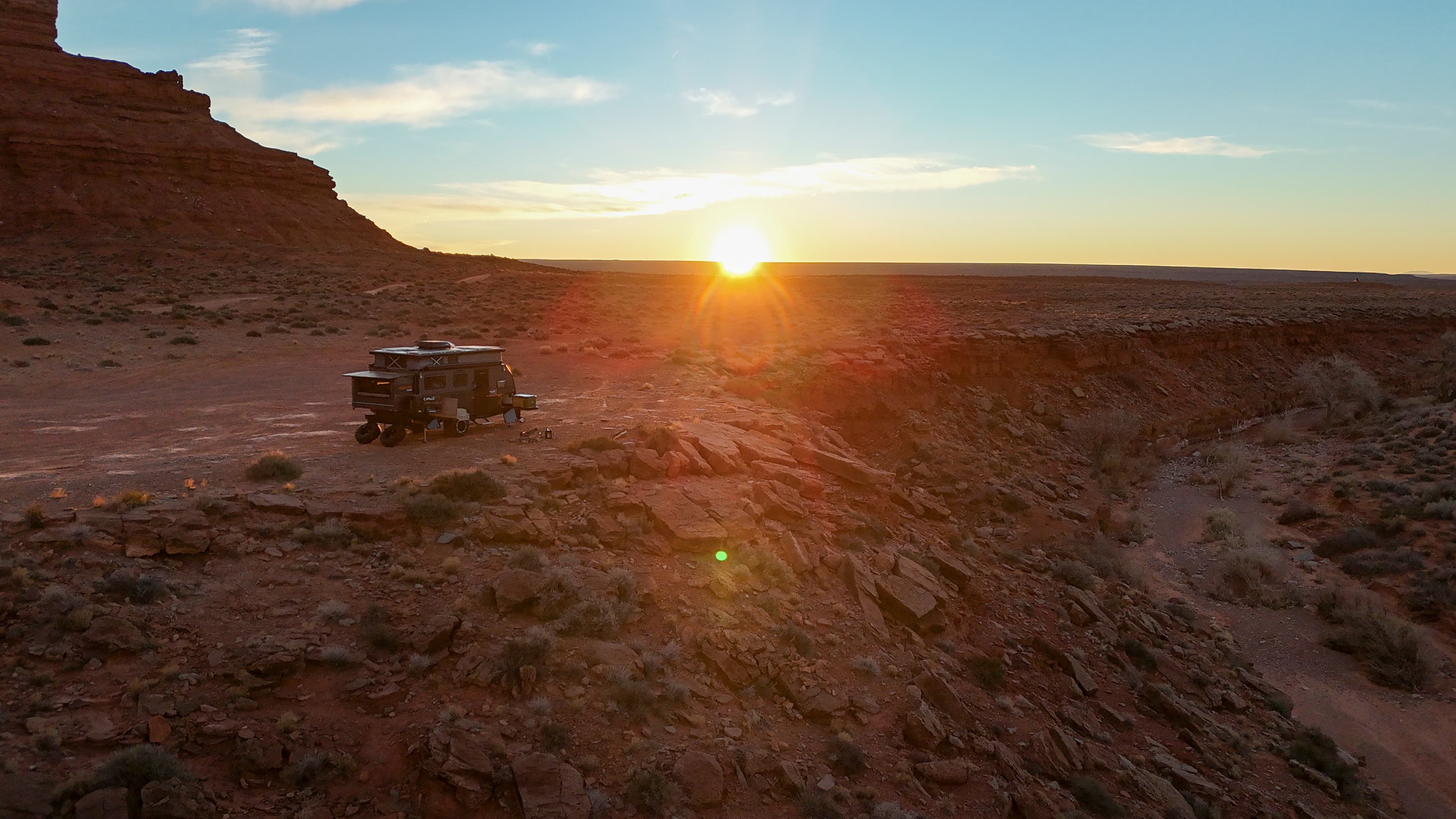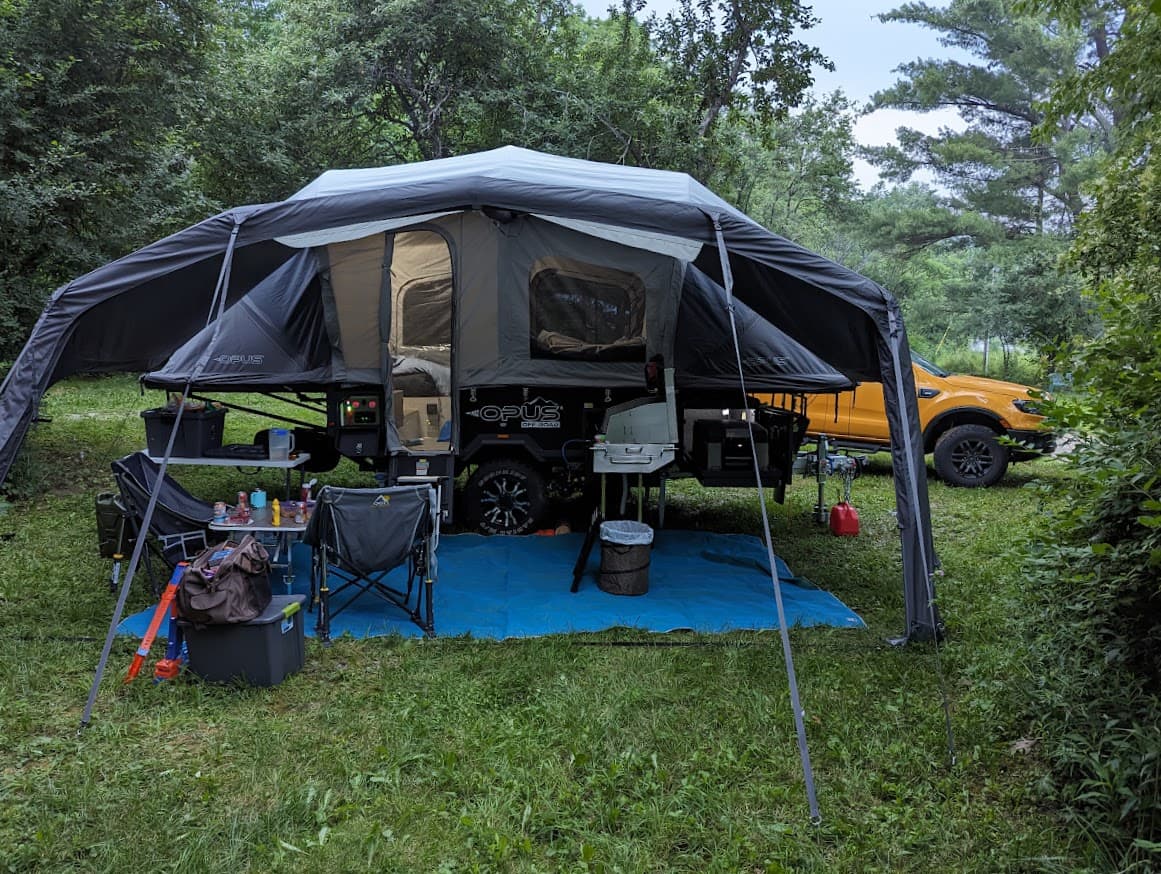
When you're miles from civilization and a storm rolls in, your off-road camper trailer becomes your shelter. That's exactly when you discover whether your rig was built for true backcountry adventure or just weekend campground duty. OPUS Camper designs folding trailers with weather protection as a top priority—because nothing ruins a family camping trip faster than waking up soaked at 2 a.m.
This guide breaks down the 10 most common weather-related failure points in off-road camper trailers. You'll learn what causes each problem and what features separate weather-ready rigs from fair-weather pretenders.
Quick guide: 10 weather weaknesses in off-road camper trailers
- Canvas and fabric water intrusion: The most frequent cause of wet sleeping quarters in popup and folding trailers
- Seam and connection point leaks: Where hard materials meet soft materials, water finds a way inside
- Poor ventilation causing condensation: Trapped moisture creates dampness even without rain
- Inadequate wind resistance: Flimsy structures buckle or tear in gusty conditions
- Zipper failures in storms: Water and cold air pour through damaged or worn zippers
- Roof seal deterioration: UV damage and age create invisible leak paths
- Cold weather insulation gaps: Single-layer materials offer little protection from dropping temperatures
- Drainage design flaws: Pooling water accelerates wear and creates weight issues
- Setup time exposure: Long assembly leaves you vulnerable during incoming storms
- Structural flex under load: Snow, ice, and heavy rain stress poorly engineered frames
How we evaluated weather performance in off-road camper trailers
Finding a camper that handles everything from desert heat to mountain snowstorms takes more than reading spec sheets. Real weather performance shows up in the details—materials, engineering, and thoughtful design choices that keep you dry and comfortable when conditions turn rough.
- Material durability: Does the fabric resist water penetration over time, or does it require constant re-treating to stay dry?
- Seal engineering: Are connection points between hard and soft materials designed to flex without separating?
- Structural integrity: Can the frame and supports handle wind gusts, snow loads, and the stress of rough terrain travel?
- Setup speed: How quickly can you get from towed position to weather-protected shelter?
- Ventilation systems: Does airflow management prevent condensation buildup during temperature swings?
- Insulation properties: What separates you from cold nights and scorching afternoons?
- Long-term reliability: Do seals, zippers, and fabric hold up season after season?
The 10 most common weather failure points in off-road camper trailers
1. Canvas and fabric water intrusion: The top cause of wet sleeping quarters
Traditional tent trailers and popup campers face their greatest challenge when rain arrives. Canvas and fabric materials degrade over time, losing their water-resistant properties. According to The Savvy Campers, tent trailers are not completely waterproof and will leak in rain, especially with long-term use.
OPUS Camper addresses this vulnerability with patented AIR tent technology. The dual-layer protected AIR beams feature 12oz/420g polycotton fabric with waterproof and UV-protected coatings. This construction maintains its integrity through years of use rather than requiring annual re-treatment.
OPUS Camper weather protection features
- Dual-layer AIR beam construction: Creates structural support while maintaining waterproof barriers that don't depend on canvas tension
- Polycotton blend fabric: Breathes better than pure synthetic materials while resisting water penetration
- UV-protected outer layers: Prevents sun damage that accelerates fabric breakdown and water intrusion
- Water-tight finned seals: Engineered connection points that flex without opening gaps
- High-strength bonding: Joins different materials without creating weak points where water pools
OPUS Camper pros and cons
Pros:
- 90-second inflation creates full weather protection faster than any pole-based system
- Patented AIR beam technology eliminates the breakable poles that fail in high winds
- Large fresh water capacity (up to 63 gallons) supports extended off-grid stays
Cons:
- Air-based systems require compressor access, though the built-in 12V compressor handles inflation independently
- Folding trailers need level ground for optimal setup, similar to most camper styles
- Premium construction materials add to overall trailer weight compared to basic popup designs
2. Popup camper seam failures: Where hard meets soft
The junction between a camper's hard body and soft tent material creates an inherent vulnerability. This seam endures constant stress during travel and setup. Traditional designs often rely on mechanical fasteners or adhesives that loosen over time.
Water entering through seam failures causes cascading damage—mold growth, delamination, and rot in wooden components. These repairs can exceed $1,000 for canvas replacement alone, according to industry estimates.
Seam engineering features to look for
- Aluminium Dibond walls: Creates a stable mounting surface that doesn't flex and stress seam connections
- Polystyrene insulation layers: Adds structural rigidity while preventing condensation at connection points
- Powder-coated frames: Eliminates corrosion that weakens mounting hardware over time
Basic popup trailer seam issues
Pros:
- Lower initial purchase price makes entry into camping accessible
- Lighter weight allows towing with smaller vehicles
- Simple mechanical systems are easy to understand and operate
Cons:
- Canvas-to-frame seams typically require resealing every season
- Lift mechanisms create pivot points where water infiltrates
- Wind flapping accelerates wear at connection points
3. Condensation buildup from poor ventilation
You can stay perfectly dry from rain yet wake up damp from condensation. When warm, humid air inside your camper meets cold surfaces, moisture collects on walls, windows, and bedding. This problem intensifies in trailers with poor airflow design.
OPUS Camper models feature 6 large windows that create cross-ventilation throughout the living space. Combined with 8-foot ceiling heights in expanded configuration, air circulates naturally to prevent moisture accumulation.
Ventilation features that matter
- Multiple window placement: Creates airflow paths that move humid air out before it condenses
- Screened openings: Allow ventilation without inviting insects during humid evenings
- Height advantages: Warm air rises—taller interior spaces let moisture move away from sleeping areas
Standard trailer ventilation limitations
Pros:
- Hard-sided trailers sometimes include roof vents
- Smaller interior volumes heat up quickly in cold weather
- Fewer openings mean fewer potential leak points
Cons:
- Limited window quantity restricts cross-ventilation
- Low ceiling heights trap humid air near occupants
- Condensation on hard surfaces drips onto bedding and gear
4. Wind damage and structural instability
Backcountry weather changes fast. A calm morning can turn into a windy afternoon that tests every component of your shelter. Rigid pole systems face particular vulnerability—metal fatigue, stress fractures, and outright snapping occur when gusts exceed design limits.
The Field Mag inflatable tent guide notes that air beam structures flex and bend in windy conditions rather than breaking. This resilience comes from the fundamental physics of pressurized structures.
OPUS Camper's AIR beam technology applies this principle to full-size camper trailers. When wind hits the structure, air beams absorb and distribute the force rather than concentrating stress at connection points. Your shelter stays intact even when conditions push beyond normal camping weather.
Wind resistance features
- 360-degree articulating hitch: Allows the trailer to flex independently from the tow vehicle during setup
- Independent trailing arm suspension: Keeps the trailer stable on uneven ground where wind effects compound
- Dual shock absorbers: Dampens movement that could stress shelter connections
Rigid pole system wind issues
Pros:
- Immediate rigidity once assembled
- Familiar setup process for traditional campers
- Replacement poles are commonly available
Cons:
- Metal poles can snap in high winds, potentially damaging fabric
- Stress concentrates at sleeve connections and joints
- Bent poles compromise the entire shelter structure
5. Zipper failures during storms
Zippers represent a critical weak point in any soft-sided shelter. When they fail—whether from wear, debris, or ice—you lose the ability to seal your living space. Water and cold air enter freely through the gap.
Premium camper trailers address this with heavy-duty zipper systems designed for outdoor use. Look for YKK or equivalent quality zippers with weather-resistant coatings and wide teeth that resist jamming.
Zipper protection strategies
- Storm flaps: Cover zipper tracks to prevent direct water contact
- Lubrication points: Accessible areas for applying protective treatment
- Backup closure options: Velcro or snap systems that work if zippers fail
6. Roof seal deterioration over time
Every camper's roof faces constant UV exposure, temperature cycling, and physical stress from travel. Seals around vents, skylights, and panel joints degrade invisibly until water appears inside during rain.
OPUS Camper's design minimizes roof penetrations by incorporating features into the integrated structure. The OP15 and OP17 hybrid caravans feature electric lift roofs that seal completely when closed, eliminating the multiple penetration points common in traditional RV construction.
Roof integrity features
- Galvanized steel chassis: Prevents rust that travels up into roof connections
- Minimal penetrations: Fewer holes mean fewer potential failure points
- Integrated lighting: Eliminates exterior-mounted fixtures that create leak paths
7. Cold weather insulation inadequacy
Single-layer tent materials offer almost no thermal barrier. Temperature inside drops rapidly as outside conditions change. This forces reliance on sleeping bags rated far below expected conditions—adding weight and cost to every trip.
OPUS Camper hybrid models like the OP15 and OP17 include Truma Combi heating systems that maintain comfortable interior temperatures regardless of outside conditions. Combined with polystyrene insulation in wall panels, these trailers extend your camping season into conditions that would shut down basic popup campers.
Thermal management features
- Truma Combi furnace: Propane heating maintains interior warmth through cold nights
- Hot water on demand: Prevents the shock of cold water washing in cool temperatures
- Insulated floor construction: 10-ply waterproof flooring stops cold from rising through the base
8. Drainage design that allows water pooling
Flat surfaces on camper roofs and awnings collect water during rain. This pooling adds weight, stresses support structures, and accelerates fabric wear. Poor drainage design turns moderate rain into potential structural failure.
Quality off-road trailers incorporate pitched surfaces that direct water away from living areas. OPUS designs include engineered drainage paths that handle heavy downpours without intervention—you won't need to push water off manually in the middle of the night.
Drainage engineering priorities
- Pitched roof surfaces: Direct water toward edges rather than collecting in the center
- Drip edges: Prevent water from tracking along surfaces into openings
- Awning tension: Proper installation prevents sag points that collect rainfall
9. Extended setup time exposure
Traditional tent trailers require 15-30 minutes for full setup. During that time, you're exposed to whatever weather arrives. An incoming storm can drench your gear and bedding before you achieve shelter.
OPUS Camper's AIR inflation technology transforms setup from a workout to a single button press. The tent structure inflates in under 90 seconds. Full camp setup—including the slide-out kitchen—takes roughly 5 minutes from arrival to shelter.
This speed advantage becomes critical when weather threatens. You can achieve full protection before rain arrives rather than racing against incoming storms. For families with children, the reduction in setup complexity also means less stress and more time enjoying the outdoors.
Setup speed comparison
- OPUS AIR technology: 90 seconds to inflate, 5 minutes to full camp
- Traditional popup: 15-30 minutes depending on model and experience
- Hard-sided hybrid: Varies by features, typically 10-20 minutes
10. Frame stress from weather loads
Snow accumulation, ice formation, and sustained rain add significant weight to camper structures. Frames designed for fair weather conditions can deform under these loads. Bent frames affect door seals, window alignment, and overall weather protection.
OPUS Camper trailers feature powder-coated aluminium frames with high-strength bonding at all connection points. The independent trailing arm suspension with dual shocks handles both travel stress and stationary weather loads. This engineering keeps the structure square and sealed through challenging conditions.
Structural durability indicators
- Frame material: Aluminium and galvanized steel resist corrosion that weakens structures over time
- Connection methods: Welded and bonded joints outlast mechanical fasteners
- Weight ratings: Adequate GVWR indicates engineering margins for additional loads
Comparison table: Weather performance across off-road camper types
| Feature | OPUS Camper | Traditional Popup | Teardrop Trailer |
|---|---|---|---|
| Setup time | 120 seconds | 15-30 minutes | No setup required |
| Ceiling height (expanded) | 8+ feet | 6-7 feet | 3-4 feet |
| Fresh water capacity | Up to 63 gallons | 0-20 gallons | 0-10 gallons |
| Integrated heating system | ✓ | ✗ | Optional |
How does climate affect your off-road camper trailer choice?
Your primary camping regions should heavily influence which trailer features matter most. Desert campers prioritize ventilation and UV protection. Mountain adventurers need insulation and heating systems. Pacific Northwest explorers require aggressive water management.
OPUS Camper's range addresses these varied conditions with different model configurations. The OP LITE works well for warm-weather weekend trips where portability matters most. The OP15 and OP17 hybrids handle extended stays in challenging weather with their enclosed bathrooms, Dometic AC systems, and Truma heating.
Consider your typical camping calendar when evaluating weather features. If you plan to camp year-round across different climates, investing in comprehensive weather protection pays dividends in comfort and equipment longevity.
What maintenance keeps your camper weather-ready?
Even well-designed trailers require regular attention to maintain weather protection. Pre-trip inspections catch seal deterioration, zipper issues, and fabric wear before they become field failures.
Clean fabric surfaces after dusty trips to prevent abrasion damage. Lubricate zippers with appropriate products—paraffin wax or dedicated zipper lubricant—before storage seasons. Inspect roof seals annually and address any cracking or separation immediately.
For OPUS Camper AIR systems, check valve function and inspect air beams for wear at fold points. The dual-layer construction provides redundancy, but catching issues early prevents trip interruptions. Keep the 12V compressor clean and test inflation before each adventure.
Why OPUS Camper trailers handle weather better than basic designs
The difference between a weekend camper and a true backcountry rig shows up when weather turns challenging. OPUS Camper builds trailers for North American families who camp in real conditions—not just sunny weekend forecasts.
Patented AIR tent technology eliminates poles that break and creates instant shelter when you need it most. The 90-second inflation transforms storm arrival from crisis to minor inconvenience. Dual-layer construction maintains waterproof protection season after season without the annual re-treatment that canvas campers require.
For off-road camping families who refuse to let weather dictate their adventures, OPUS Camper delivers the durability and weather protection that basic trailers simply cannot match. Explore the full lineup at opuscamper.us and discover what tough luxury means for your next backcountry adventure.
FAQs about weather weaknesses in off-road camper trailers
Why do tent trailers leak during rain?
Canvas and fabric materials lose water resistance over time through UV degradation and physical wear. Connection points between hard and soft materials also create vulnerable seams. OPUS Camper addresses both issues with dual-layer polycotton construction and water-tight finned seals designed for lasting protection.
How do air beam tents handle high winds?
Pressurized air structures flex rather than break under wind stress. The air beams absorb and distribute force across the entire structure instead of concentrating it at rigid connection points. OPUS Camper's AIR technology applies this principle to create shelters that survive conditions that would damage traditional pole systems.
What causes condensation inside camper trailers?
Warm, humid air from breathing and cooking meets cold surfaces and releases moisture. Poor ventilation traps this humid air inside the living space. OPUS Camper designs incorporate 6 large windows and tall ceiling heights to create natural airflow that moves moisture out before it condenses.
How long does it take to set up an OPUS Camper in bad weather?
OPUS Camper's AIR inflation technology inflates the tent structure in under 90 seconds using the built-in 12V compressor. Full camp setup takes approximately 5 minutes, giving you weather protection before most incoming storms arrive.
Can off-road camper trailers handle snow loads?
Quality off-road trailers with properly engineered frames handle moderate snow accumulation. OPUS Camper uses powder-coated aluminium frames with high-strength bonding at connection points. The independent trailing arm suspension maintains structural integrity under both travel stress and stationary weather loads.
What features prevent roof leaks in camper trailers?
Minimal roof penetrations, quality seal materials, and pitched surfaces for drainage all contribute to leak prevention. OPUS Camper hybrid models feature electric lift roofs that seal completely when closed, eliminating the multiple penetration points common in traditional RV construction.